 by
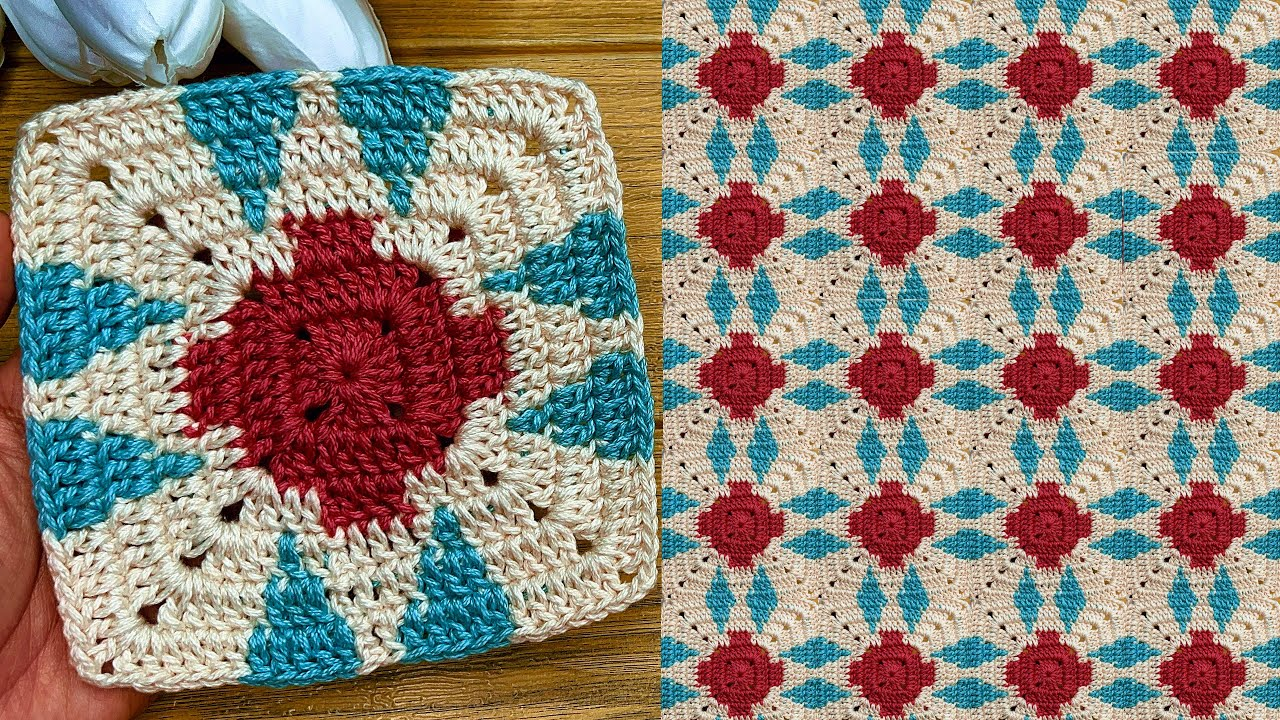
by Colorwork in granny squares is what separates a “hand-me-down” from a “high-fashion heirloom.” While a single-color square is a great foundation, Colorwork involves strategic yarn changes to create gradients, geometric shapes (like diagonals), or vibrant “pop” centers.
For a blanket, colorwork allows you to create a secondary pattern—like a giant diamond or a chevron—simply by how you arrange the colored squares.
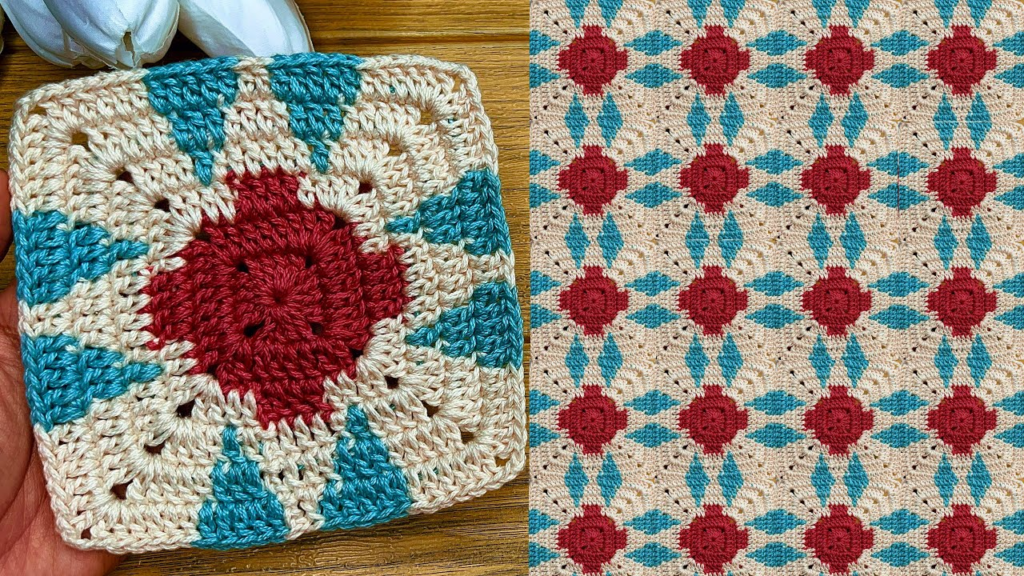
🧶 The Colorwork Toolkit
When working with multiple colors in a blanket, dye lots and fiber consistency are your best friends. If one color is slightly thicker than the others, your squares will be wonky.
| Item | Recommendation | Why? |
| Yarn | Worsted Weight (Size 4) Acrylic or Cotton | Holds its shape well and stands up to frequent washing. |
| Hook | 5.0 mm (H/8) | Provides the perfect balance of drape and structure. |
| Colors | 3 High-Contrast Tones (e.g., Cream, Mustard, Charcoal) | High contrast makes the “colorwork” geometry pop. |
🛠 Technique 1: The Clean Color Change (Round-by-Round)
The most common colorwork is changing yarn every round. The secret to a professional look is the “Standing Stitch.”
- Finish Round 1: Cut your yarn, leaving a 6-inch tail. Pull the loop through.
- The Standing Double Crochet: Create a slip knot with your New Color on your hook. Yarn over, insert the hook into any corner space, and complete a Double Crochet as usual.
- Why? This avoids the “ugly” starting chain-3, making your color transitions invisible.
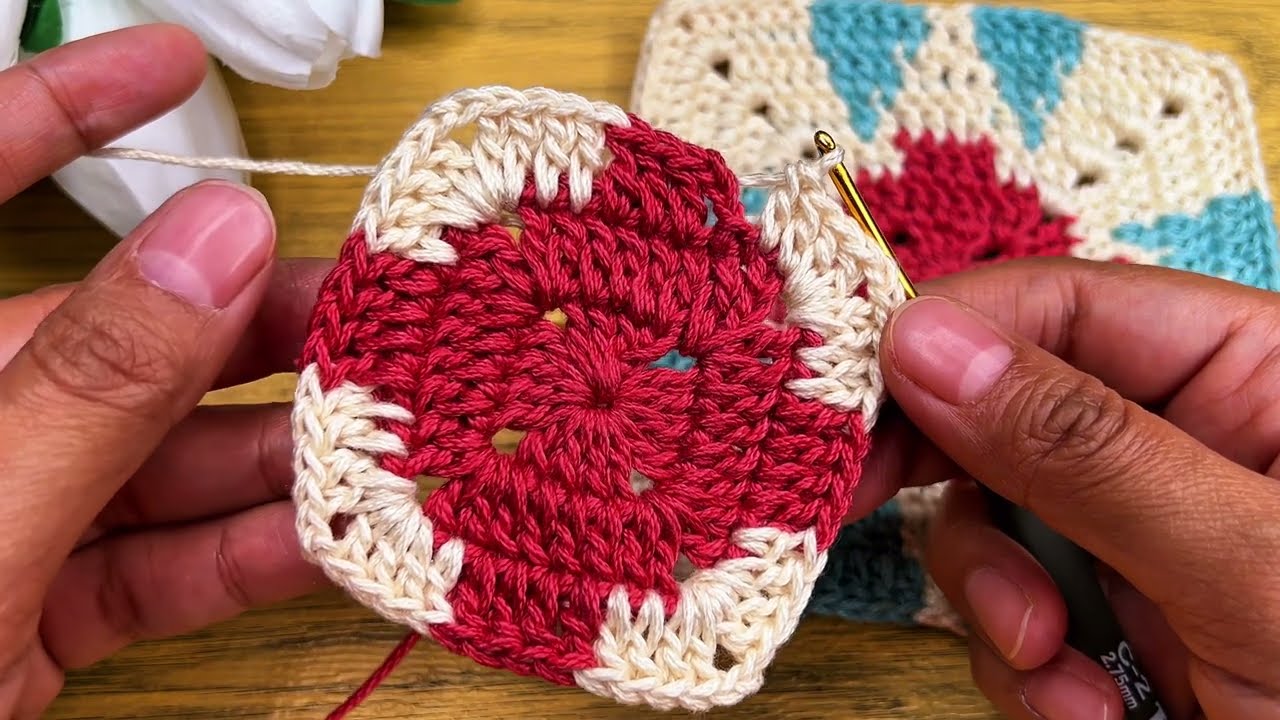
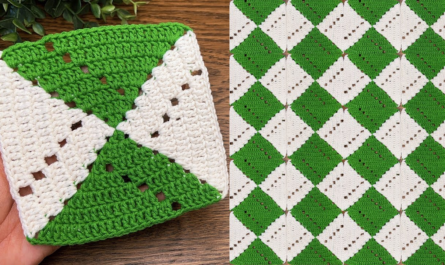
🛠 Technique 2: The Two-Tone Diagonal Square
This is a “Modern Twist” on colorwork. By changing colors halfway through a round, you create a diagonal split that looks incredible when joined into a blanket.
The Diagonal Pattern (US Terms)
- Round 1: Start with Color A. Work 2 clusters (3 dc, ch 2, 3 dc).
- The Switch: On the last pull-through of the 2nd corner chain, drop Color A and pick up Color B.
- Finish Round: Work the remaining 2 clusters with Color B.
- The Look: You now have a square that is half one color and half another, split perfectly down the diagonal.
📐 Blanket Math: The Colorwork Formula
If you are planning a specific pattern (like a “checkered” or “gradient” blanket), you need to know how many squares of each color to make.
Let $T$ be the total number of squares, $W$ be the width in squares, and $L$ be the length in squares. The total number of squares needed is:
$$T = W \times L$$
If you are doing a Checkerboard Pattern, you will need:
$$\frac{T}{2} \text{ squares of Color A and } \frac{T}{2} \text{ squares of Color B.}$$
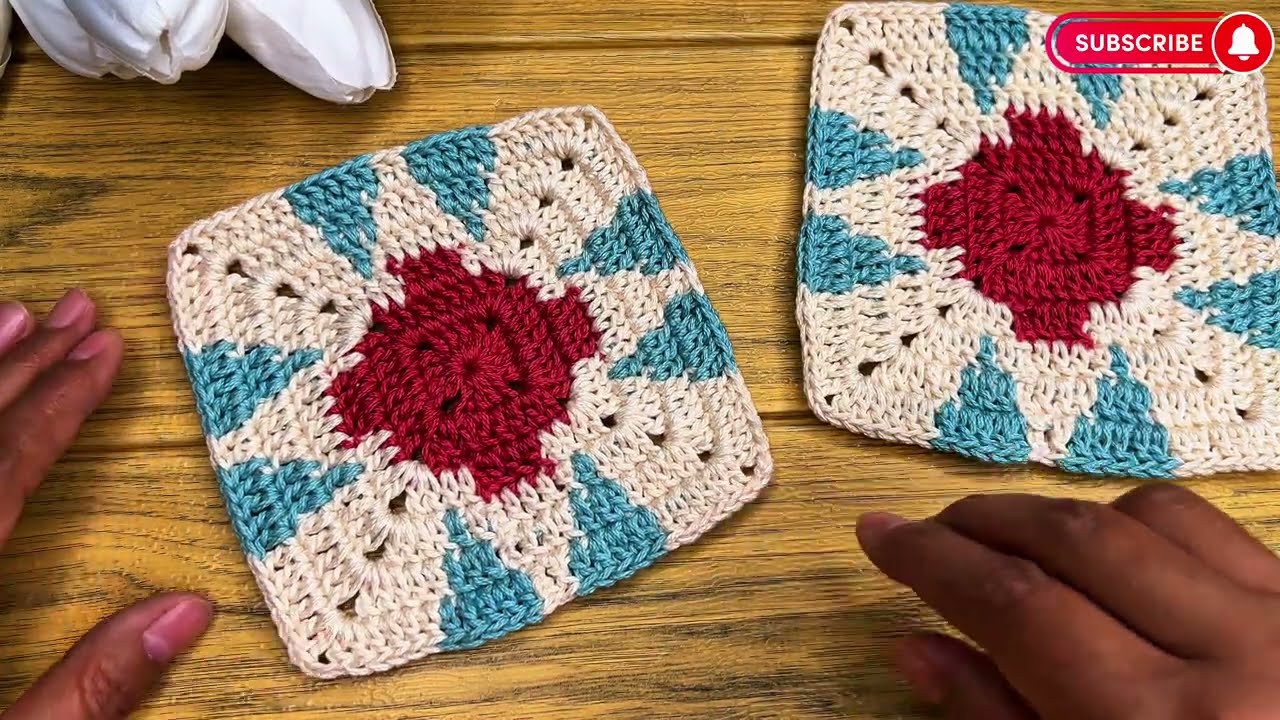
💡 Gemini’s “Pro-Level” Colorwork Tips
- The “Spaghetti Monster” Prevention: Colorwork creates twice as many yarn tails. Weave them in as you go. If you wait until the blanket is finished to weave in 200 tails, you will never want to look at a crochet hook again.
- Carrying the Yarn: If you are doing the diagonal square, don’t cut the yarn every time. “Carry” the unused color by crocheting over it. This keeps the back of the blanket looking as clean as the front.
- Tension Check: Changing colors can sometimes make your corners “loose.” Give your yarn tails a gentle tug after joining a new color to snug up the stitches.
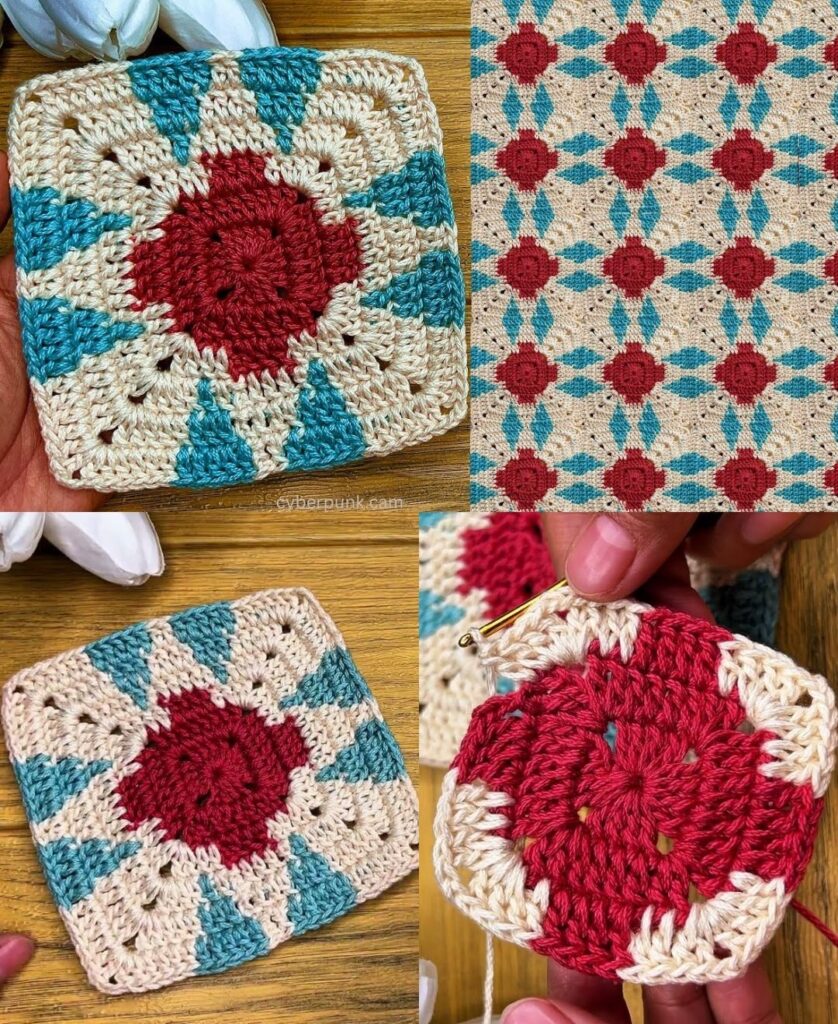
✨ Joining for a Seamless Finish
For blankets with heavy colorwork, I recommend the “Flat Slip Stitch Join.”
- Lay two squares side-by-side.
- Using your “Anchor” color (the most neutral one), slip stitch through the Back Loops Only of both squares.
- This creates a beautiful, flat “braid” between the colors that looks like a professional frame.
Would you like me to help you design a “Color Layout Map” for a standard throw blanket using three specific colors?